
On Sunday, March 11, 2018, the Parish Choir of the Episcopal Church of the Ascension (directed by James Garvey) and the Westminster Presbyterian Choir (directed by Peter Van Eenam) presented the Requiem by Maurice Durufle (1902-1986), as one of the events in its Friends of Music and the Arts (FOMA) series.
| James Fellenbaum | James Garvey | Peter Van Eenam |
|---|---|---|
 |
 |
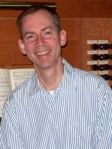 |
| University of Tennessee | Church of the Ascension | Westminster Presbyterian |
The choirs and orchestra were conducted by James Fellenbaum, Assistant Professor of Music and the Director of Orchestras at the University of Tennessee. In addition to conducting the ensembles of the Orchestra Program, he is the conductor of the UT Opera Theater productions, and the founder of the UT Chamber Orchestra in 2004.
As there was no recording of that performance, please follow this link to hear the King’s College of Cambridge Choir.

In the late nineteenth and early twentieth centuries Gregorian chant was enjoying a renaissance in the Catholic Church. It was within this cultural and liturgical milieu that Maurice Durufle was educated. At the age of ten he became a chorister and organ student at the cathedral in Rouen, which had a famous school of chant. He completed his education at the Paris Conservatory, where chant was a part of the curriculum for organists. Like a number of other European organist-composers, when he began to compose organ and choral works he made use of Gregorian chant and modal harmonies.
The Requiem’s Introit, stating the prayer for which the Mass for the Dead is named, is one of the great openings in music, simple and yet profound–as if the ancient chant, sung by men’s voices, had been carried forward forever by the flowing line of the violas and the organ. At the end of the movement, the chant is played by the orchestra while the entire choir sings a descant line that crescendos to the final words “Et lux perpetua luceat eis”–“May light perpetual shine upon them.”
The Kyrie, which follows immediately, is in the traditional three parts. It begins with a masterful use of polyphony, as the voices enter one by one. Eleven measures in, the trombones take up the chant in slow “cantus firmus” fashion. In the second section, the “Christe eleison,” women’s voices sing in a quasi-canon fashion. The music then builds to the final Kyrie section with a stunning crescendo.
The Domine Jesu Christe, the offertory of the mass, is by far the longest movement and the most complex in its moods.
One can imagine the Sanctus as being sung by a choir of angels, accompanied by Durufle’s rippling arpeggios, It begins and ends quietly with the treble voices, but builds to a tremendous crescendo in the middle with the sopranos soaring to a high B-flat.
The intense, deeply expressive Pie Jesu is a duet between a mezzo-soprano soloist and a cellist. The Agnus Dei contrasts with a major-key tonality, a flowing figure beneath, and counterpoint in the voices at the second iteration of the Agnus Dei. The meditative Lux Aeterna features alternations between a chant-like organ solo and the choir, with the sopranos singing the Gregorian chant.
The final two movements, Libera Me and In Paradisum, are parts of the Absolution said over the coffin at the burial. The final movement, and the Requiem, end on a prolonged and surprising unresolved chord, suggesting perhaps a yearning for resolution in the afterlife.
Program Notes – by Carolyn Moser
 Perpetual Motion